Fandom culture has always been at the center of music and art. Indie pop musician Lauren Luiz, better known as girlhouse, has a litany of experience in the world of music, everywhere from opening for Sabrina Carpenter on tour to performing on Broadway. For her, the supporters of her music have been the driving force for all of her creation and success. “Interacting with fans has helped develop girlhouse to where it is today. This project was created in a bit of a COVID vacuum, and it took about two years to get her out in front of people. When I finally was able to tour, I started to realize that I’d never had the same response from anything I’d created in my life thus far. It was so helpful to hear people’s connections to the music and really helped me figure out what message I wanted [or] needed to send.” (Luiz, 2026). When the fans are having such a major impact on the art itself, it only makes sense that they would play a role in its promotion as well. It is a symbiotic relationship, as the fans receive music that they enjoy and connect with, and the artist receives their support and the publicity that comes with it. Whether through planned, extended efforts and projects, or simply by word of mouth and personal enjoyment, music fans are often able to generate a high amount of publicity for an artist all on their own, but public relations professionals that have caught on to this trend are also able to use this to their own advantage.
Historical “Mania”
Despite the boost provided to it by the popularization of the internet and social media, fandom culture is nothing new. Many will likely be familiar with one of the founding moments of overt and all-encompassing celebrity or musician fandom, “Beatlemania,” the title given to the devotion held by many for The Beatles in the 1960s. However, this was not the beginning. In fact, Beatlemania’s title itself was derived from “Lisztomania,” the term coined by German poet and essayist Heinrich Heine in the early nineteenth century in order to describe the chaos and fervor of fans attending performances by pianist Franz Liszt. (Ewens, 2020). The “madness” or “hysteria” that comes from being a follower of a musician or entertainer only increased throughout the twentieth century with Frank Sinatra, Elvis Presley, and eventually The Beatles proving that some would go to great lengths when it came to appreciating the art that they enjoyed. As Ewens puts it in Fangirls, most of these behaviors are fairly indistinguishable from the behaviors of dedicated fans today.
“Enthusiasts—mostly teenagers—purchased Beatles albums, listened to their music on transistors and turntables, formed fan clubs, plastered their walls with Beatles posters, voraciously consumed Beatles-themed merchandise, and wrote fan letters to band members…The fans, in short, sustained Beatlemania, energized by the band’s creativity, and the connections they made with each other.” (Hunt, 2023). The Beatles’ current status as a household name in music cannot only be accredited to their music itself, but to the dedication of their fans. Not only were they able to promote their music themselves, but those who enjoyed their work acted as a walking promotion for them of their own accord. This is one of the first examples of musicians being able to not just release their music for their fans to listen to, but use their fans as promotion themselves, a practice which has only increased alongside the capabilities of technology. If an artist can make art, and a fan holds the tools at their disposal to expand upon it, they will. Once music videos and MTV grew in popularity, as did fanmade videos. “Fandom blurs any clear-cut distinction between media producer and media spectator, since any spectator may potentially participate in the creation of new artworks…these artists gain national and sometimes international recognition within fandom; their videos compete in competitions and receive awards…yet their reputations cement their allegiance to the community, rather than distinguish them from it.” (Jenkins, 1992). The creativity and capabilities of an artists’ fanbase has always been directly linked to the amount of transformative work that their art has inspired, drawing more and more eyes to their source in the process.
Creativity As Encouraged By the Brand
Since it is a fan’s primary instinct to want to get involved, to connect themselves to the work that they idolize, public relations professionals in the twenty-first century have learned how to give them the space to do this, with the growth of social media making this easier than ever. If you were to click on the X/Twitter profile of any self-proclaimed “Swiftie,” or fan of Taylor Swift, you might notice that in the bio under their name, they have written the letters “TN” along with a number. This is meant to denote the amount of times that their posts have been liked, shared, or replied to; not by Taylor Swift herself, but by “Taylor Nation,” the account run by her team. Fan accounts for musicians have been around about as long as social media has, but “official” fan accounts have only begun to pop up in the past few years. If you continue down the rabbit hole that is “stan twitter,” “stan” being an abbreviation of “stalker fan,” you will find similar team-run accounts for nearly every popular artist today, such as Harry Styles’ @HSHQ, Ariana Grande’s @TeamAriana, and Olivia Rodrigo’s @LiviesHQ. These accounts generate publicity by one primary means: interacting with fans. Since most fans who choose to generate transformative work could never have the luxury of getting that work in front of someone as big as Swift herself, her team can do it for her. These accounts are able to share user-generated content as well as encourage it themselves. They can promote conversation about fans’ favorite tracks on a new album. They can create different hashtags under which fans can post photos of themselves at the artists’ concerts.
With the rise of TikTok as a platform, the possibilities for transformative works by fans all but skyrocketed. The app’s mission statement was to inspire creativity through short-form user-generated content, with music functionality built into the app’s camera. This meant that fans could make videos with any song by their favorite artist, whenever they wanted, and a song’s popularity on the app has become nearly synonymous with its popularity in streaming. According to the New York Times, “TikTok, where users load short video clips, often with music in the background, is a vital promotional arena for the music industry. A music-driven viral meme on TikTok can make a song a hit or revitalize a decades-old classic…” (Sisario, 2024). In 2020, When TikTok creator Keara Wilson created a dance to Megan Thee Stallion’s new song “Savage,” it quickly gained traction as more and more users started posting themselves doing the dance as well. In response to this, Megan Thee Stallion posted a video doing the dance as well, declaring that everyone should do the dance for a video with the hashtag #SavageChallenge. Megan Thee Stallion and her team were able to capitalize on the attention that fans were bringing to her song and could bolster this by encouraging it and interacting with the videos the fans made. As a result, the song hit number one on the Billboard Hot 100 and to this day nearly ten million videos have been made with the sound on TikTok.
Buzz Through Direct Involvement
In the Summer of 2025, Sabrina Carpenter was gearing up to release her seventh album Man’s Best Friend, and fans were waiting to hear the track titles. Unexpectedly to most, on July 22nd X/Twitter user Mariah, who ran a fan account for Carpenter, posted a photo of herself with a golden retriever puppy bearing resemblance to the one on the back cover of the album, sitting on a director’s chair with the word “Goodbye” on it. Mariah’s post was captioned, “oh my god i’m helping Sabrina and i’m the first to announce the 12th song on Man’s Best Friend called ‘Goodbye.’” Other fans were unsure what to make of this at first, until they saw that the photo was reposted by Carpenter herself. This continued the next day, with another Sabrina Carpenter fan account posting a photo of themself, the puppy, and a new track title. The same thing happened every day until the final track had been revealed. The direct involvement between fans and Carpenter’s team helped to generate a massive amount of publicity for the album. Fans spent every day waiting for a fellow social media user to reveal the title, possibly even hoping that they themselves could be picked. Rather than simply posting the reveal herself, Carpenter was able to send the news through more direct channels, creating a sense of community among fans, and more likely than not cementing the chosen few as fans, and advocates, for years to come.
This was not the first case of an artist’s team going straight to the fans for promotion. Once again, the huge name that is Taylor Swift is another at the forefront of this practice. A former staple of her album rollouts was at one point her “secret sessions,” an intimate album listening party at her own home that a select few fans got to attend before its release. Not only was this experience likely a dream come true for each fan invited, it also gave Swift the opportunity to drum up online conversation about the album, from those who are likely to think positively about it, before critics can sway the narrative in any direction. Fans not attending the party would wait expectantly to hear the thoughts that the “sessioners,” as they are often dubbed, are allowed to share. “We measure pre-release buzz in terms of … communication across social platforms … and find that such anticipatory behaviors significantly shape audience participation leading up to release.” (Schreiner et al., 2025). Both Swift and Carpenter exemplify the ways in which direct fan involvement in the lead-up to a release can help to generate anticipation for the project for all fans, as well as solidify the fandom of those select few.
Coordinated & Independently Generated Efforts
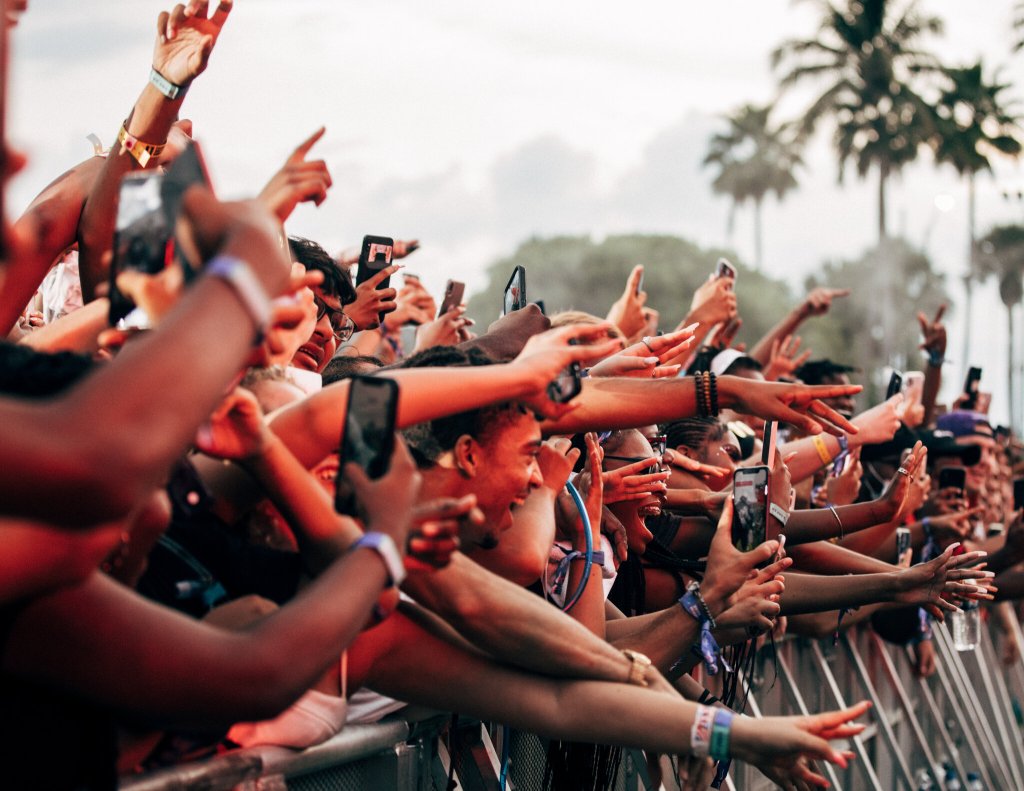
While prompting can certainly help with motivating fan’s creativity when it comes to promotion, music fans often have this spark all on their own. Concert “fan projects” are one example of this. “Fan projects are collaborative creations organised by a fan or a group of fans meant to support an artist or draw their attention to the fans.” (Whitney, 2024). These projects can range from simple chants during a song that catch on amongst the crowd, all the way to coordinated efforts involving a push on social media prior to the event or passing out items to be used during the show beforehand. A few of the most elaborate fans of British pop singer Harry Styles took these fan projects one step forward, by designing an app called Lightcert. The function of the app was that fans could hold up their phones during any moment of Styles’ “Love On Tour” and the screen would light up a certain color matching the song that Styles was currently playing, as well as everyone else in the arena. In an interview with Jazmin Williams, Emma Currie, one of the leads of the Lightcert project, said, “From a fan perspective, we can definitely say that projects like these are amazing because of the way they make you feel connected to the show, the other fans, and the artist. It’s such a lovely experience when everyone works together to make a one-night special. People are brought together when they otherwise wouldn’t be.” The Lightcert app’s own Instagram has over three-thousand followers, and has drawn many eyes to Harry Styles and “Love On Tour,” proving how these coordinated fan efforts can make a major difference for artists.
The social media era has brought on even more independent fan-driven promotion for artists, sometimes even without the necessary creativity or transformation that was often involved in the past. Fans, such as for K-pop group BTS, will go as far as using their dedicated fan accounts as well as other resources to generate pure unpaid marketing for the music that they support. “Their fanbase, known as the ARMY, is famous for its dedication. The ARMY doesn’t just support BTS by streaming their songs—they organize massive social media campaigns, break streaming records, and even donate to charitable causes in the group’s name. The ARMY is a powerhouse, and their unwavering loyalty has undoubtedly contributed to BTS’s global success.” (Illustrate, 2025). If you were to open any post on X/Twitter that has gained a decent amount of traction by a music “stan” account, you will often notice that the first reply in the thread is the original poster encouraging those who liked their post to stream the most recent release by their favorite artist, often accompanied by a clip. Fans in the twenty-first century do not just see success of the music they enjoy as just that, they view it as an extension of themselves. The culture of music fandom is algorithmic. (Yin, 2020). They enjoy the music, so they want everyone else to as well. This is something that can lend to modern public relations in many familiar and new ways.
Future Utilization in the Social Media Landscape
In years past, magazines, radio, and other mediums in which traditional earned media can be obtained might have been the way that a consumer would discover new music, but these have significantly decreased in popularity in the time since the emergence of the internet. While generating traditional media buzz is important due to the credibility that it provides, the sheer numbers that come from social media buzz can arguably outweigh this in the twenty-first century. For this reason, fan engagement as a form of promotion is only getting started, as says Jon Landman, CEO of music marketing firm The Syndicate. “Most artists are posting on social media because it’s a direct connection to the fans. I think it’s only gonna get more important. As it’s harder and harder to get earned media to talk about your art, your fans [will.]… If you’re an artist with a thousand followers, those are the people who know about you and probably care the most about you, and you need those people to tell more people to get them to care about your project.” (Landman, 2026). In the era in which word of mouth from just about every person in the world is just as accessible as picking up your newspaper, conversation holds an incredible weight in public relations, especially as it pertains to music, and this requires adaptation in the way that marketing is conducted. Going forward, this could increase even beyond what can already be seen. Music public relations as a whole could see a major shift from traditional broadcasting to grassroots community efforts for virality. Agencies could make a concerted effort to cultivate fans so dedicated that they will continue to act independently as free promoters of their artists. The passion of music fans allows for an exponential increase in the amount of promotion a publicist can provide and endless possibilities for strategies in doing so.
—
References
Ewens, H. (2020). Fangirls: Scenes From Modern Music Culture. University Of Texas Press.
Hunt, A. (2023). Beatlemania in America: Fan culture from below. Bloomsbury Publishing.
Jenkins, H. (1992). Textual poachers: Television fans and participatory culture. Routledge.
Schreiner, T. F., Mandler, T., van Heerde, H. J., & Haiduk, C. (2025). Dynamics of pre-release consumer buzz: Driving communication, search, and participation for market performance. Journal of the Academy of Marketing Science, 53. https://doi.org/10.1007/s11747-024-01077-y
Sisario, B. (2024, February 1). Universal Music Group pulls songs from TikTok. The New York Times. https:/www.nytimes.com/2024/02/01/arts/music/universal-group-tiktok-music.html
The power of fanbases: How superfans drive music success. (2025, September 17). Illustrate Magazine. https://illustratemagazine.com/the-power-of-fanbases-how-superfans-drive-music-success/
Whitney, A. (2024, December 8). A fangirl’s guide to concert fan projects . That Fangirl Life. https://thatfangirllife.com/2024/12/a-fangirls-guide-to-concert-fan-projects/
Williams, J. (2021, October 3). Interview: Meet the fans bringing concert projects to the next level through technology at Harry Styles: Love On Tour . The Honey POP. https://thehoneypop.com/2021/10/03/interview-lightcert-app-harry-styles-love-on-tour/
Yin, Y. (2020). An emergent algorithmic culture: The data-ization of online fandom in China. International Journal of Cultural Studies, 23(4), 475–492. https://doi.org/10.1177/1367877920908269


Leave a Reply