
Chaka Mishoe, Maggie Schmidt, Sydney Ameigh
For a city to be granted the title of World Heritage City of Music by the United Nations Educational, Scientific and Cultural Organization, it must be inextricably linked with music as a whole. These cities are rich in musical history, and music continues to thrive in the modern day, both in upholding tradition and creating a strong culture that bonds the community. These cities are able to develop economically thanks to their music, and help other cities to grow as well. In 2006, Bologna was the first Italian city to be given the title of UNESCO World Heritage City of Music. This was thanks to its massive music institutions such as the Conservatorio Giovanni Battista Martini, Teatro Comunale, and Accademia Filarmonica. Musical innovation has been rife in Bologna for many years, and it continues to this day. Not only is Bologna a city full of musical history that can be viewed at a variety of museums and other landmark destinations, it is a place where one can experience the music of today, in a variety of genres and a variety of settings.
Bologna’s Musical History
When walking through the streets of Bologna, you’ll hear the sounds of Vespas, bikes, chatter, and various conversations of the people surrounding you. Occasionally, in the City Center, you’ll hear a jazz band comprised of trumpets, melodicas, French horns, and snare drums, creating a pleasant atmosphere while people shop, eat, and carry on. The presence of the band is obvious, but it’s not disturbing or unwanted; it amplifies the life of the city and is indicative of its appreciation for music dating back centuries.
The incredibly talented street musicians of Bologna only deepen one’s curiosity about why Bologna has been a UNESCO World Heritage City of Music since 2006. After all, Bologna is home to the Accademia Filarmonica di Bologna, or the Bologna Academy of Music. The academy is one of the longest-standing music schools in the world, dating back to 1666. It was initially founded by Vincenzo Maria Carrati, a Bolognese nobleman who enjoyed music, as an association of musicians that included talents such as Giovanni Paolo Colonna, who was the association’s first president.
In 1716, Clement XI approved the statute of academy, and in 1749, Benedict XIV certified the academy to administer the Maestro di Capella (choirmaster) title, a very prestigious musical position in early modern Europe. Two decades later, Giovanni Battista Martin would observe a 14-year-old Wolfgang A. Mozart within the academy’s grand walls.
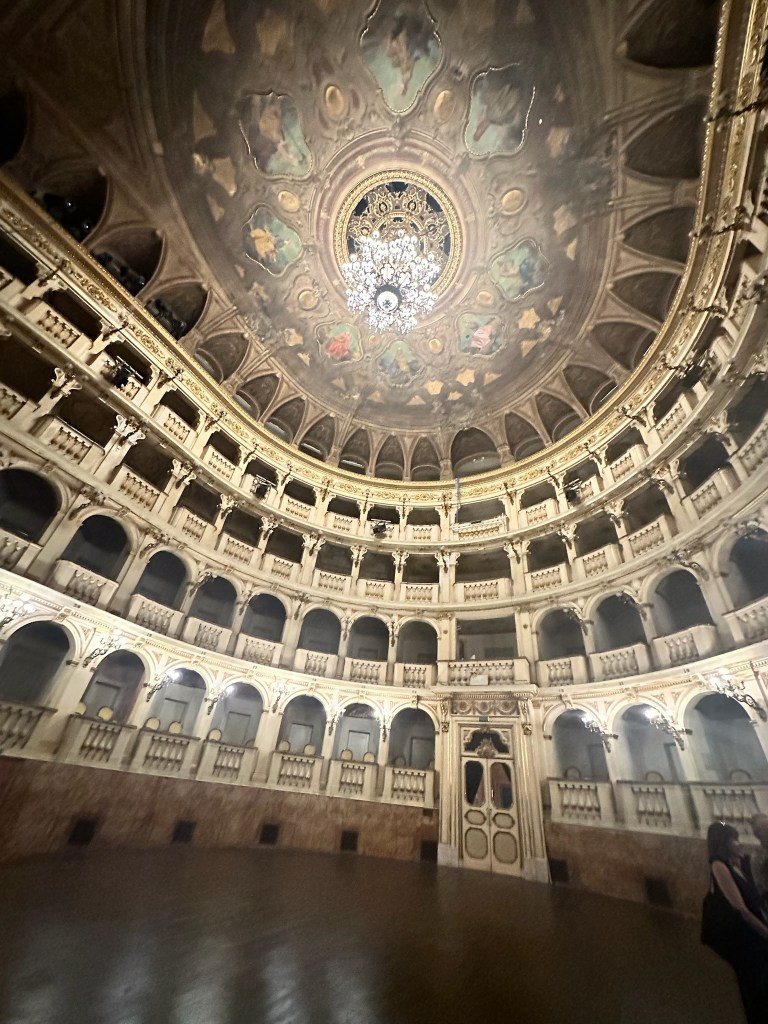
Bologna’s Teatro Comunale makes an even stronger case for why it deserves its UNESCO City of Music title. This opera theatre became open to the public in 1763, after Pope Clement XIII agreed to the City Council members’ request for its building. The theater, which hosts up to nearly 1000 guests, was opened with the intention to make opera more accessible to the public, although the cost of tickets remained a hurdle to that end.
Construction of the theater began after a fire destroyed a previous theater (Teatro Malvezzi) in 1749 which prompted the city to build a more permanent opera house. The opera house’s oval shape was designed by Antonio G. Bibiena. The architecture creates a space that balances grandeur with intimate connections between performers and the audience. It remains one of the longest-standing civic opera houses in the world. The musical roots being planted in Bologna continue to grow in modern music still being made today.
Current Musical Practices of Bologna
While Bologna has had many musical innovations and notable moments in history spanning back hundreds of years, what really helps establish the city as a UNESCO World Heritage City of Music are the variety of ways that it continues to create music and the novel opportunities to experience it.
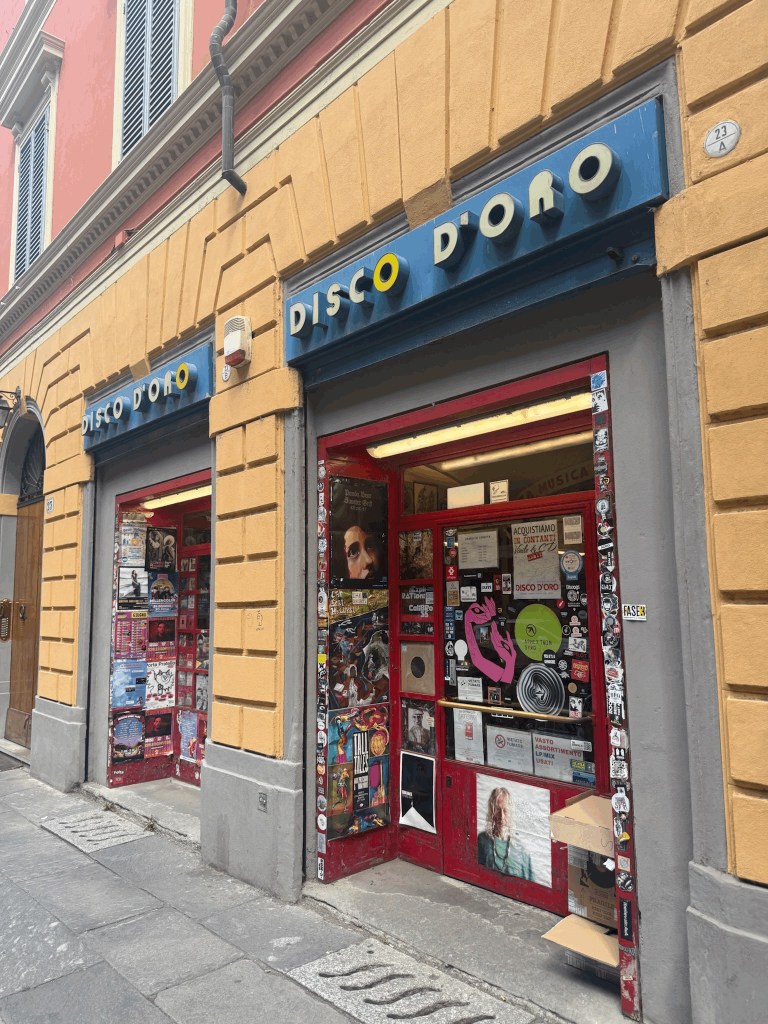
One of the many things that makes Bologna’s musical culture so rich is the variety of genres and types of music that its inhabitants perform and listen to. These genres range from classical music of the fifteenth century through the latest pop songs and everything in between. At Disco D’Oro, a record store located at Via Galliera that has been beloved by the community for nearly fifty years, you can find anything from pop music to punk rock available on the shelves. At the Cassero LGBTQ+ Nightclub, they have themed nights ranging from sets fully dedicated to Italian music to sets fully dedicated to American acts such as Madonna or Lady Gaga. Many patrons of the city also continue to enjoy more classical music genres, with the Teatro Comunale di Bologna’s operatic performances still thriving in 2025.
The people of Bologna are an incredibly talented group. For example, Roberto Regazzi, a renowned luthier, or maker of stringed instruments, has resided in Bologna for decades. Regazzi has been making violins for many prestigious clients for fifty five years now, and he is passionate about his work. He is just one in a sea of gifted artists and musical innovators that are creating their work in the city of Bologna.
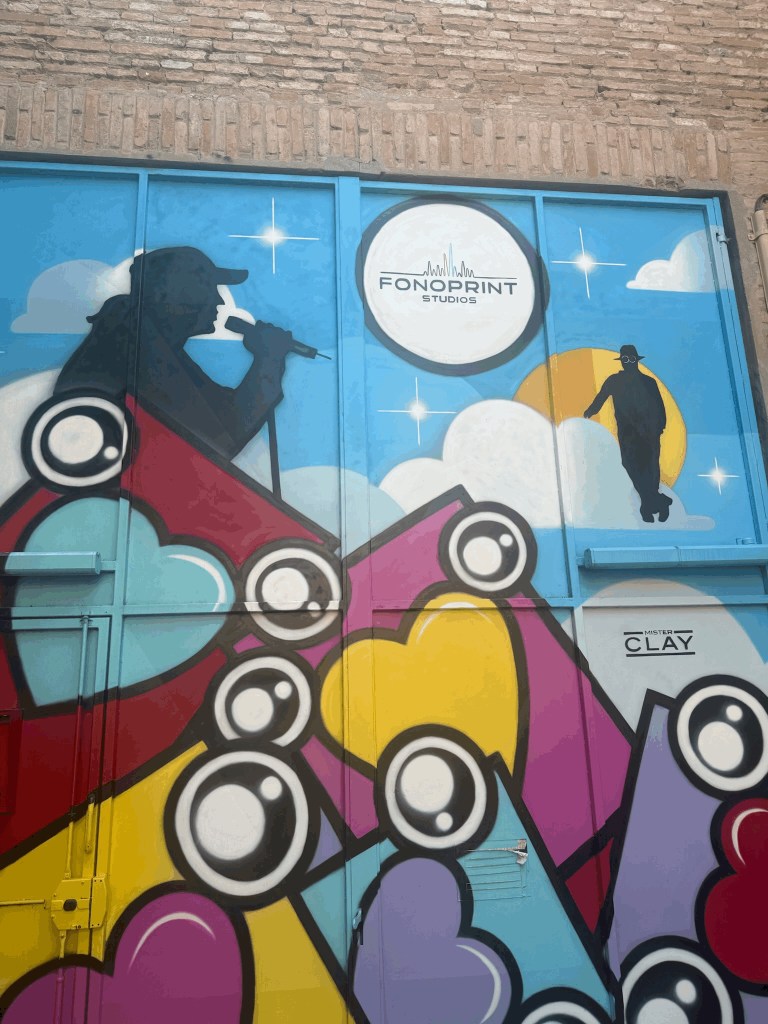
Another pivotal moment in Bologna’s musical legend was when an applied music course began being offered at The Conservatorio Giovanni Battista Martini in the 1960s. This course was incredibly popular among students, and led to an increased interest in musical composition and production. As a result, Fonoprint Studios was founded in 1976. This recording studio is the birthplace of many albums by some of Italy’s most beloved singers, such as Lucio Dalla, Vasco Rossi, and Cesare Cremonini, and continues to produce music today. In the years that it has been in operation, Fonoprint has evolved in terms of genre and complexity, but has remained dedicated to upholding tradition, with a great amount of care going into the songwriting and mastering of every record.
What truly makes Bologna a city of music is the way in which live performances can be found high and low. Classical music can be heard at the Teatro Comunale, as well as in churches, monasteries, theaters, museums, schools and parks by students and professionals alike. Electronic dance music is incredibly popular in the night life at clubs such as Cassero, and even at music festivals such as roBOt, a dance music festival which has occurred every fall in Bologna since 2008. This is not the only music festival that is popular in Bologna, as festivals occur yearly for just about every musical genre, with other examples being AngelicA for pop music, the Bologna Festival for classical music, and the Jazz Festival for jazz music. Jazz can also very commonly be found being played in the city center by street performers, which set the soundtrack for wandering the streets and exploring. One of the most prevalent places jazz can be heard and seen is at “Strada de Jazz.” This street in the center of the city contains a “walk of fame” featuring stars for some of the most renowned Italian jazz musicians. Finally, if you dig a bit deeper, you can discover Bologna’s underground music scene at bars or clubs such as the Freakout Club. Here is where you will be able to hear post-punk and alternative music, which is one of the city’s most identifiable genres.
Any music lover visiting the city of Bologna will be spoiled for choice when it comes to what type of musical experience they want to have. If they want to create, there are a variety of resources for them. If they want to listen, there are many different genres to enjoy. And if they want to experience it up close along with the community, there are opportunities to do so at every corner.
Preserving Music & Culture
Whether you are a lover of music from past generations, or a modern indulger of the arts, you will find something that captivates your ears in Bologna, Italy. There are many different scenes of which the people of Bologna put the effort in, to fully celebrate and embrace their music culture, going back generations. Other people are proud of their ability to preserve past generations’ passion for music, along with bringing them together with the new generations. An example of this would be the Cassero LBGTQ center.
We had the pleasure of visiting this center. We learned about all of the resources they offer to anyone that needs it. What stood out to us as journalists was their strong sense of community. A place where everyone of all ages can come together and share their love of the same music within an underground club setting. The underground club is open three nights a week, and each night is a different theme. Some would be, “Gaga Night,” “Madonna Mia”, and Saturday nights, which mostly consist of commercial pop music, hip-hop etc. These nights are something of a movie. Mauro Copeto said to us that his favorite part of being a DJ and working with this center is that during these nights, being able to look out into the crowd and seeing everyone just loving each other and dancing together.
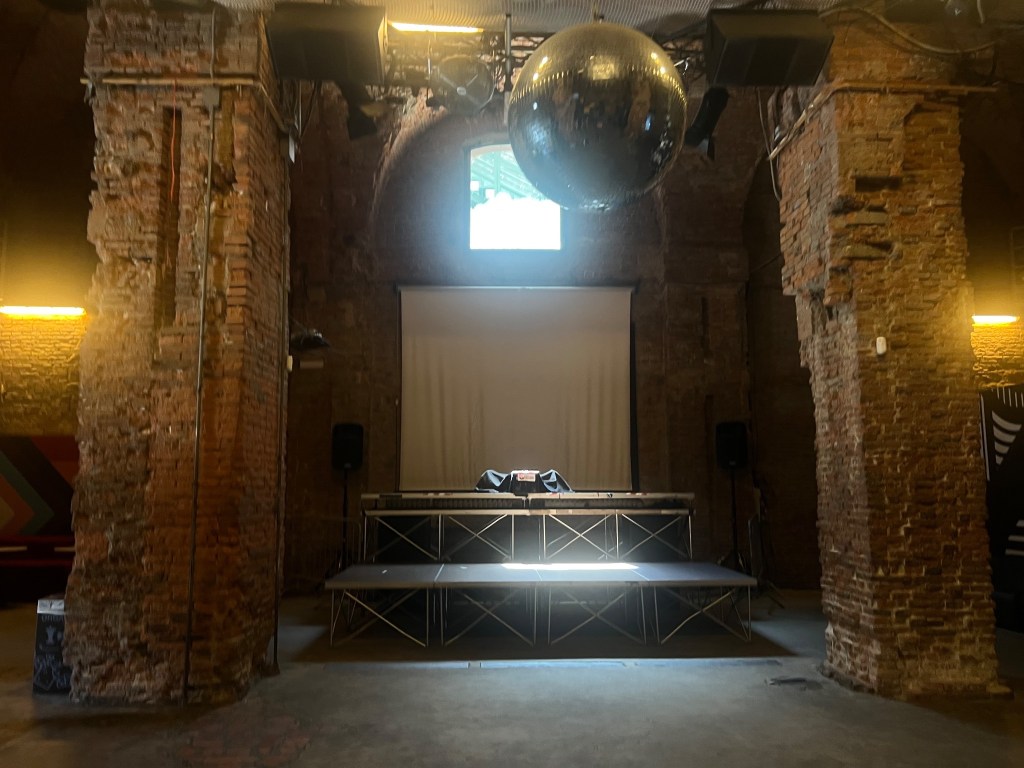
“Throwing parties is a political thing…it’s the easiest way to bring [people] together.” -Mauro Copeto
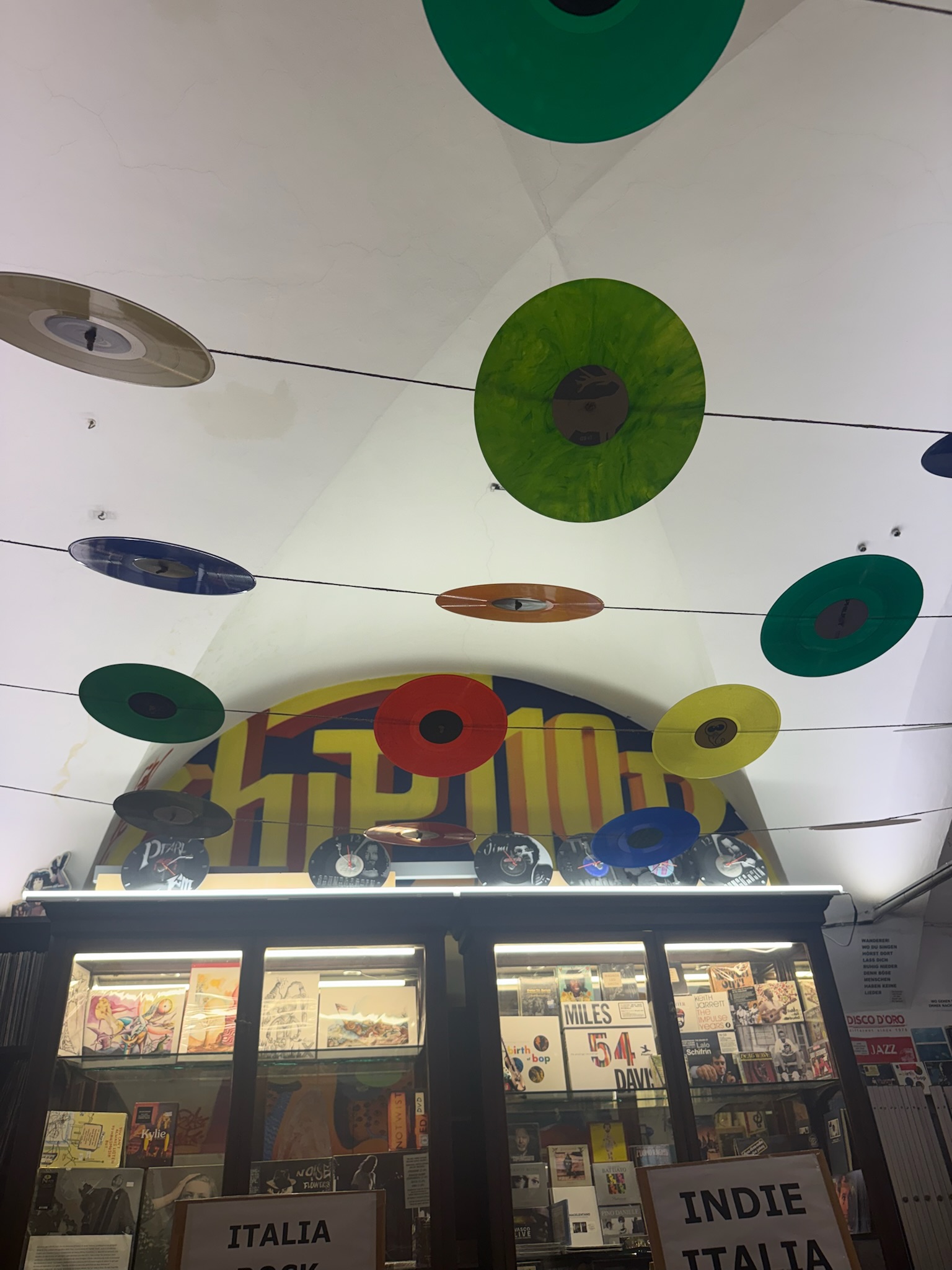
After learning about Bologna’s history regarding their music scene, and the current practices that are being partaken in, you may have noticed one continuous theme among the people we’ve had the pleasure to meet. Every worker of the museums, every citizen who loves music, and the professionals whose lives revolve around music all emulate an undeniable passion for music. The art of preservation is highlighted through every detail within Bologna, “the city of music.” Even the vinyl stores you pass by during your morning cup of coffee.
There is a Vinyl Room located in the Salaborsa. This room was created to give citizens and tourists the opportunity to listen to vinyl records the way they were intended to be listened to. This room is filled with thousands of different vinyl records, with dozens of different artists and genres. The people of the museum wanted to create an experience that requires 100% of your attention. There are no headphones allowed, just a high end vinyl player, a wide selection of music, two chairs, and a quiet room. This is an immersive and a must-see experience for all music lovers. Listening to vinyl is a ritual, an art that has been underappreciated as time goes on. This is actively preserving and celebrating the art of truly soaking the art music, and listening to every cord being played.
Bologna, Italy has deep musical roots that have definitely earned it the title of UNESCO World Heritage City of Music. From the history shown in Bologna’s Teatro Comunale, to current musicians like Roberto Regazzi, or the preservation of old music rituals like the Vinyl room located in Salaborsa. Everywhere you go, your ears will be filled with street performers, echos of the opera, or someone playing a song out of their window. Bologna, the UNESCO World Heritage City of Music, is not only a place to listen to music, it is a place to experience generations of music, and live in it.


Leave a comment